
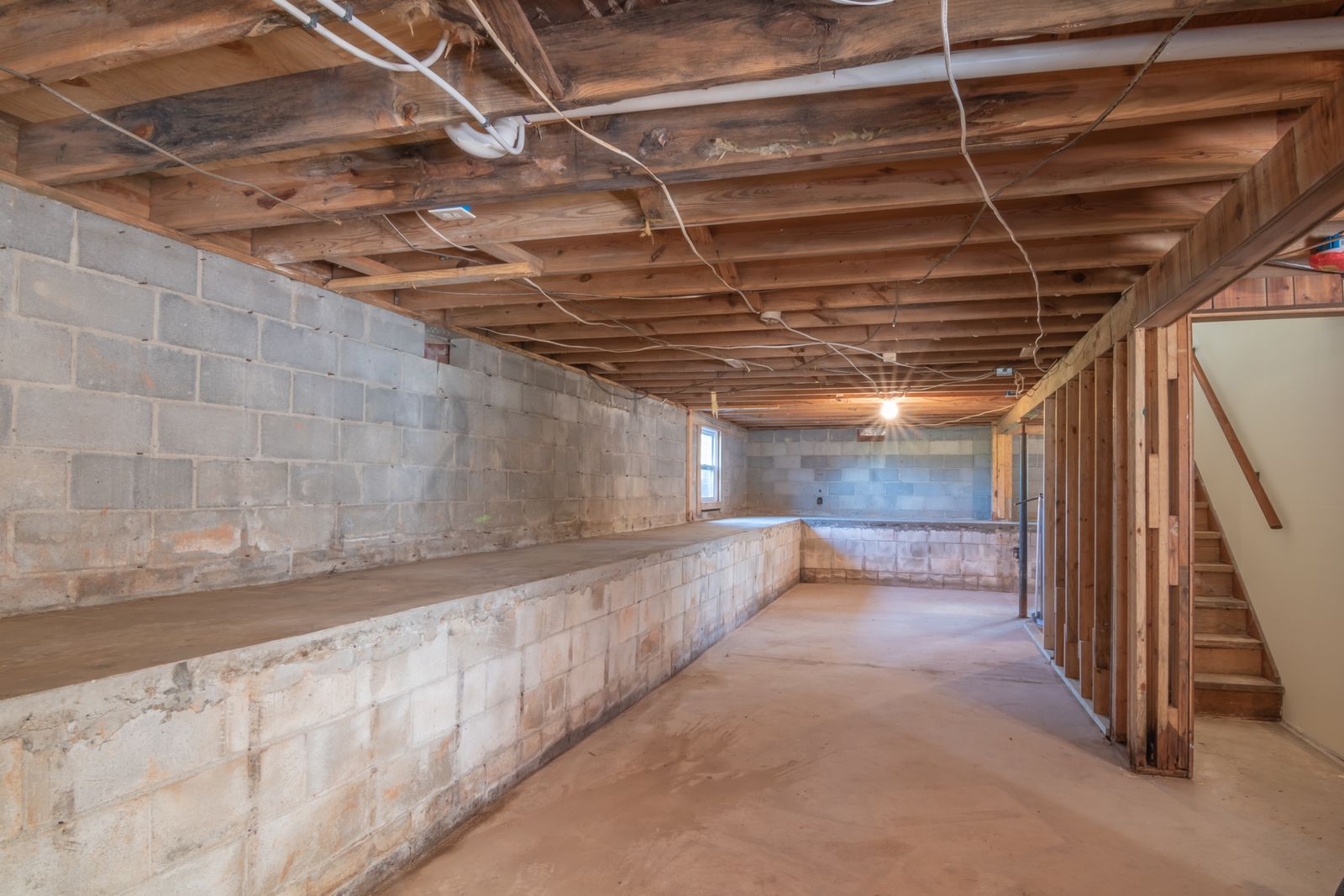
What Interior Waterproofing Involves
Interior waterproofing installs a perimeter drain — sometimes called interior weeping tile — along the inside edge of the footing, just beneath the basement floor. A section of concrete floor is cut and removed along the wall, the drain is laid in a bed of gravel at the footing level, and it’s connected to a sump pump and pit that discharges the water outside, away from the foundation. The floor is then patched back over the drain. We’re upfront about what this does and doesn’t do: it manages water that has already entered the space between the wall and the drain, moving it away before it becomes standing water on your floor. It doesn’t seal the outside of the wall the way exterior waterproofing does.
That makes interior waterproofing the right call in specific situations rather than a universal fix. It’s a strong option when the exterior isn’t reasonably accessible — finished landscaping, a deck or patio built over the area, a shared wall with a neighbouring property, a narrow lot with no excavation room, or simply a lower budget than a full exterior dig requires. Our interior vs. exterior waterproofing guide lays out the honest trade-offs between the two so you can see which one actually fits your property.
What’s Included
- Floor assessment and cutting along the affected wall to expose the footing area where the drain will run.
- Interior perimeter drain installation set in gravel at the footing, collecting water before it reaches the living space.
- Sump pump and pit connection so collected water is pumped out and discharged well away from the foundation.
- Floor patching and cleanup once the drain system is tested and confirmed to be working properly.
What to Expect
- Inspection & assessment. We confirm water is entering along the wall/floor joint and check whether interior drainage is the right fit.
- Written estimate. A clear scope and price before any cutting starts.
- Floor cutting & excavation. A channel is cut and dug down to the footing along the affected wall.
- Drain, gravel & sump connection. The perimeter drain is laid and tied into the sump pump system.
- Floor patch & test. Concrete is patched back and the system is tested to confirm it’s draining and pumping correctly.
When to Call Us
Interior waterproofing is worth discussing whenever water is entering along the base of a basement wall and exterior excavation isn’t realistic or appealing. Call sooner if you notice:
Get it looked at promptly if: water regularly seeps in along the floor-wall joint after rain or snowmelt, you’ve got finished landscaping or hardscaping that rules out exterior digging, you’re on a shared or attached wall, or you’ve noticed water tracking toward a floor drain that isn’t keeping up.
Frequently Asked Questions
Does interior waterproofing stop water from entering the wall?
No — it manages water after it enters, collecting it at the interior footing and pumping it out. It doesn’t seal the outside of the wall the way exterior waterproofing does. We’ll always tell you honestly which approach fits your situation.
Is interior waterproofing cheaper than exterior?
It generally involves less disruption than a full exterior excavation since there’s no digging up the yard, but the right choice depends on your specific water problem, not just cost. We give you an exact written estimate for either option after inspection.
Will I need a sump pump installed as part of this?
Yes, an interior drain needs somewhere to send the water it collects. If you don’t already have a working sump pump, one is installed as part of the system.
Can interior waterproofing be done in winter?
Since the work happens indoors along the basement floor, it’s generally not affected by outdoor weather or frozen ground the way exterior excavation is.
How long does interior waterproofing take?
A typical section is completed in a few days, including floor cutting, drain installation, sump connection, and patching. We’ll give you a specific timeline in your written estimate.
How We Grade a Crack
- 01 · HairlineThin, dry, not moving — monitor it
- 02 · Vertical / diagonalWider, may weep after rain — repair it
- 03 · Stair-stepFollows the mortar joints — assess it
- 04 · Horizontal / bowingPressure on the wall — act promptly
Related Services
Interior or Exterior?
Read our guide comparing interior vs. exterior waterproofing before you decide, or just book a free inspection and we’ll tell you what fits your home.
Get a Free Inspection
No obligation, and a written estimate before anything is scheduled.
Book InspectionWater Coming In Along the Floor?
A free inspection tells you exactly where it’s coming from and what fix actually solves it — in writing, before any work is scheduled.
Direct lines
- 416-288-0547Mon–Fri, 9:00 am–4:00 pm
- [email protected]Send us the details
- 1344 Danforth AveToronto, ON M4J 1M9